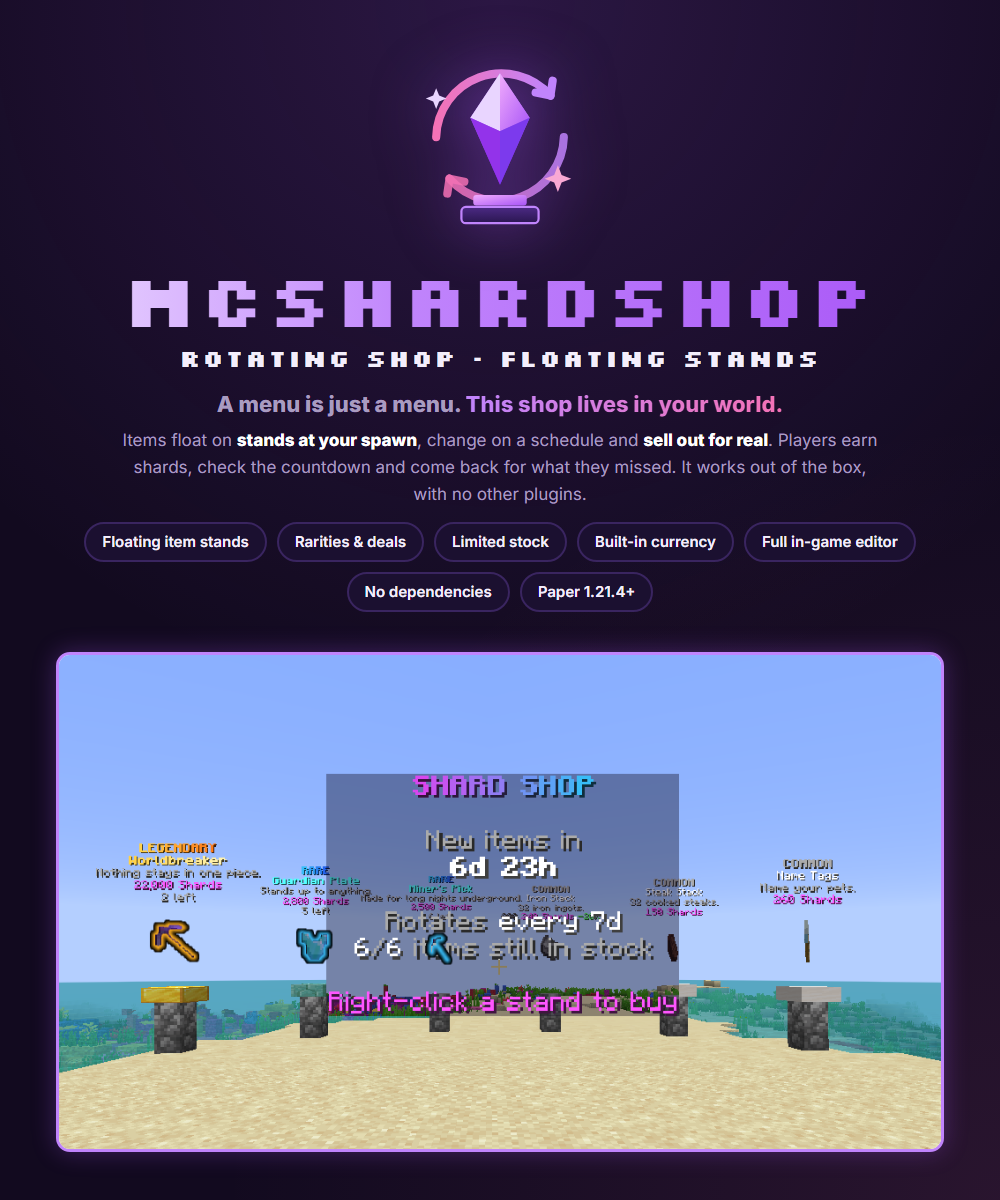
A shop that lives in your world.
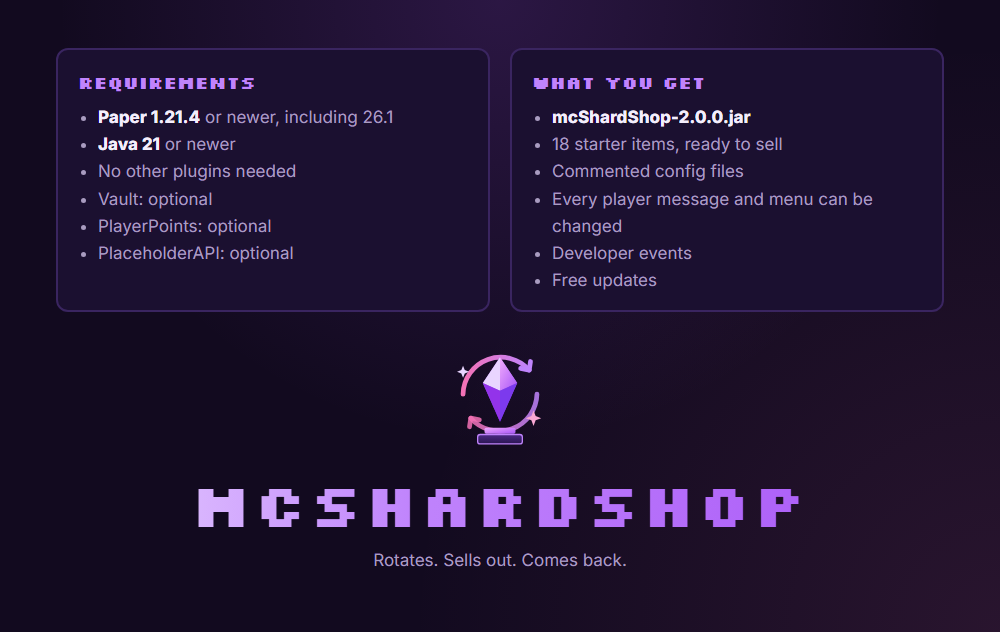
Items float on stands at your spawn, change on a schedule and sell out for real. Players earn shards, watch the countdown and come back for what they missed. It works out of the box, with no other plugins.
Items that float in your world
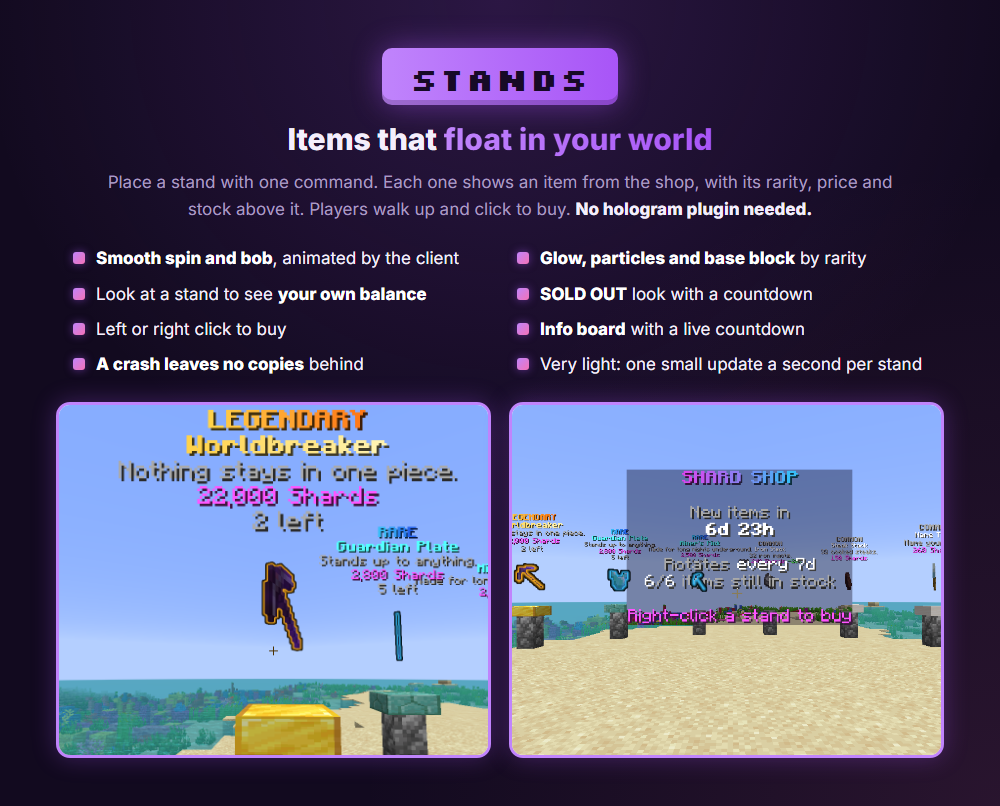
Place a stand with one command. Each one shows an item with its rarity, price and stock, and players click it to buy. Stands use Minecraft's own display entities, so no hologram plugin is needed. They spin smoothly, glow in the rarity's color, and show players their own balance when they look at them. A crash can't leave copies behind.
A reason to come back
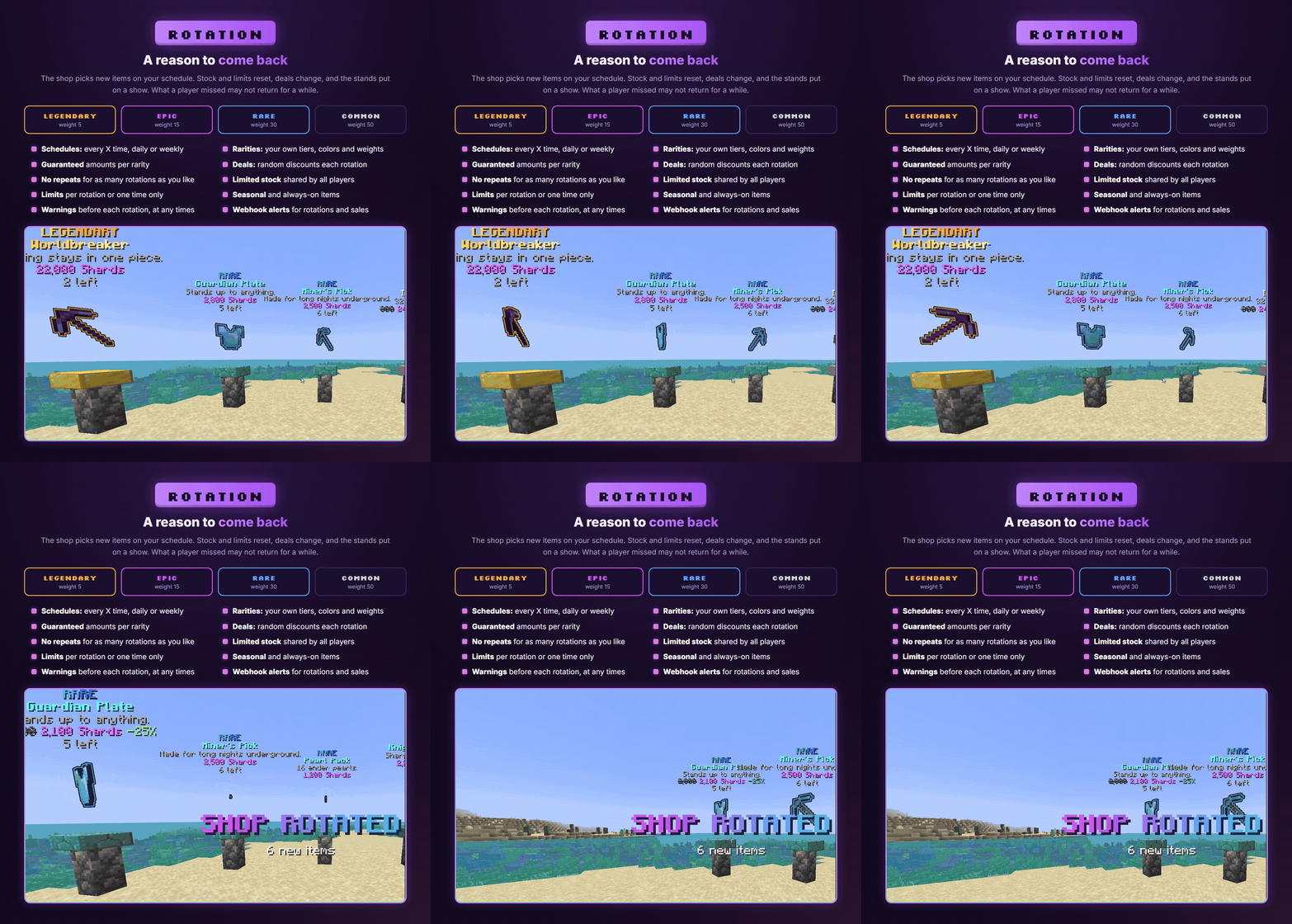
The shop picks new items every X hours, daily or weekly at a set time. Set your own rarities, weights and guaranteed amounts. Items get random deals, limited stock and per-player limits, and they stay away for as many rotations as you like. When the shop rotates, the stands put on a short reveal.
Walk up, click, buy
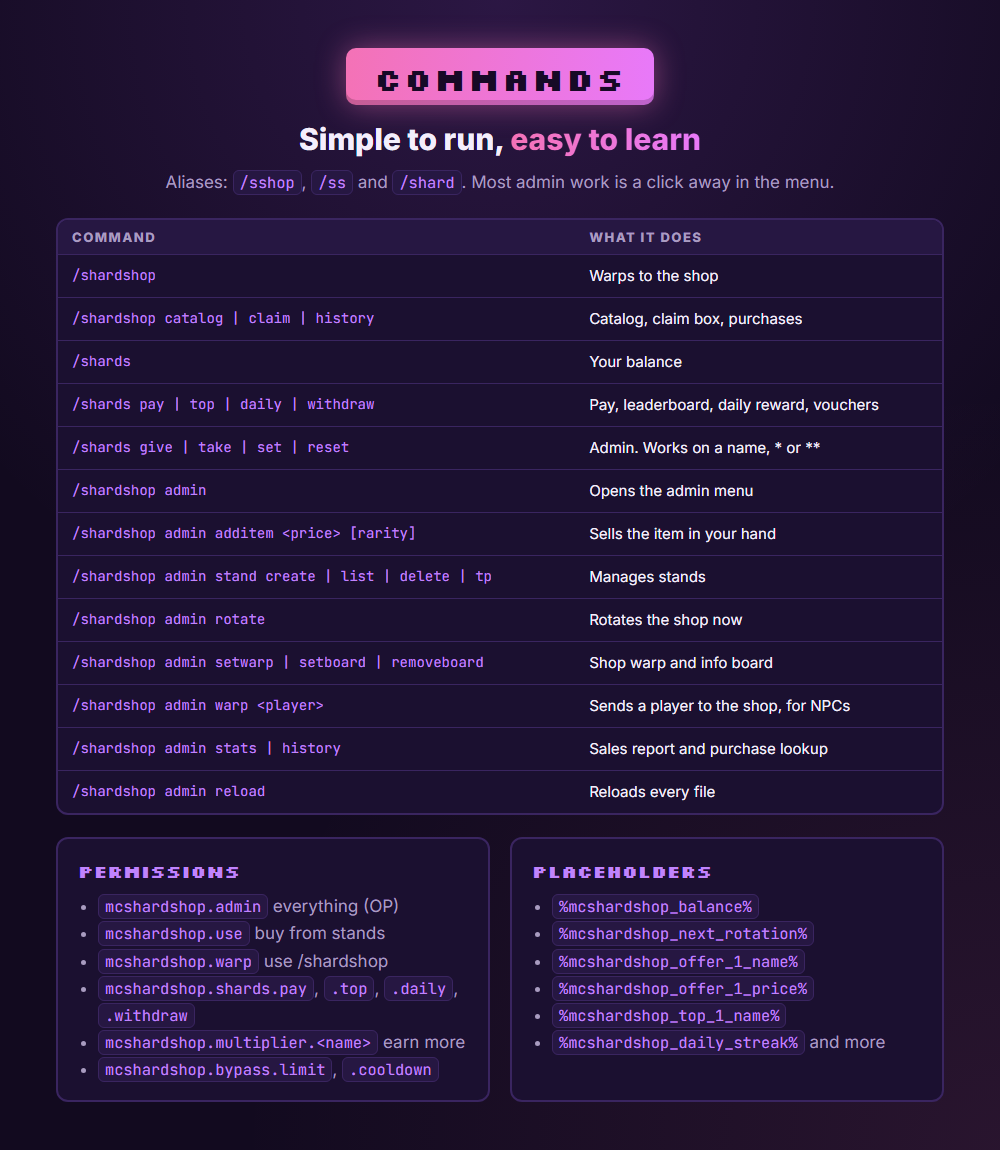
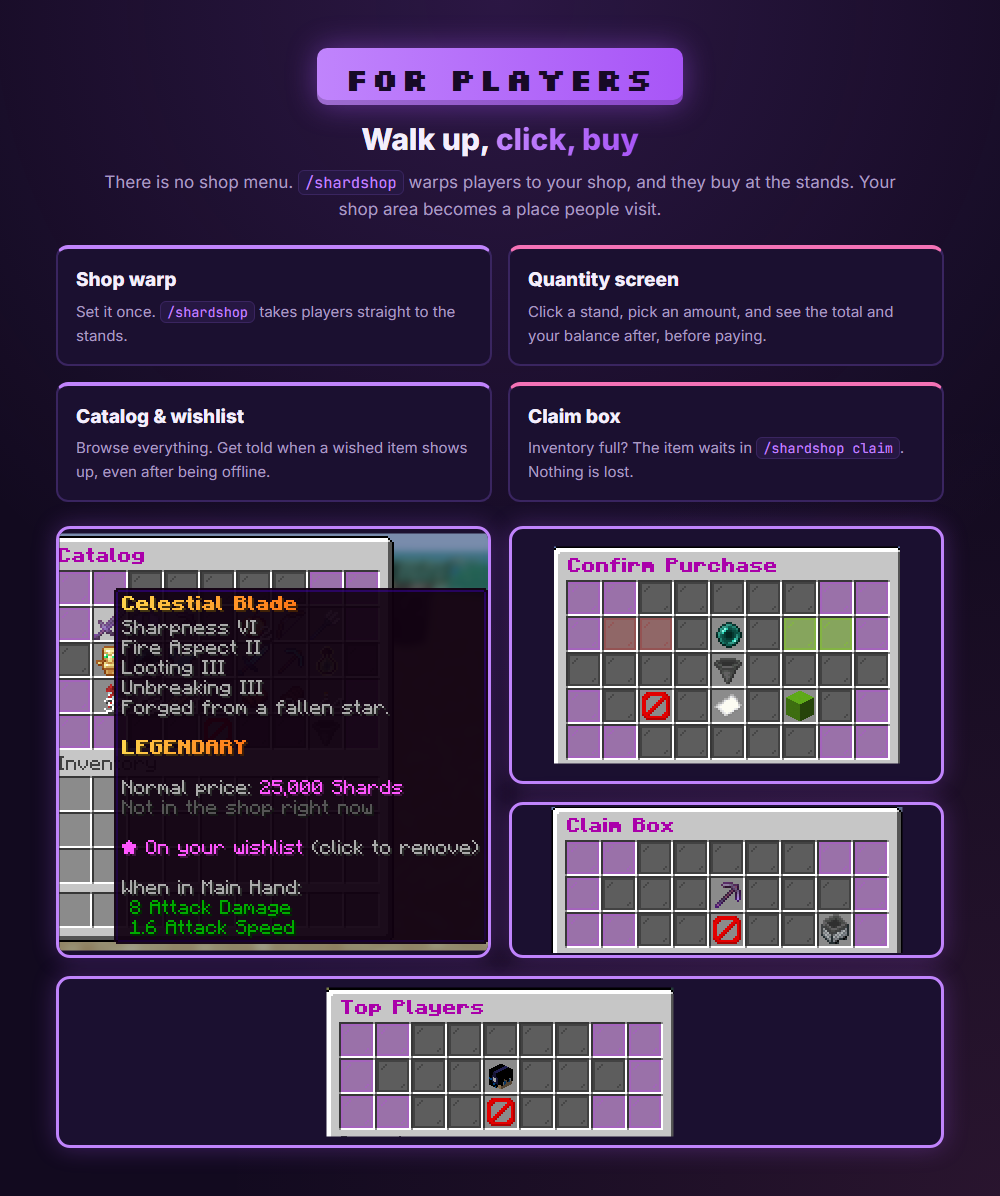
There is no shop menu. /shardshop warps players to your shop, and they buy at the stands, so your shop area becomes a place people visit. Players pick an amount and see the total before paying. They can browse the catalog, build a wishlist and get told when an item shows up. If an inventory is full, the item waits in a claim box.
A full economy, ready to go
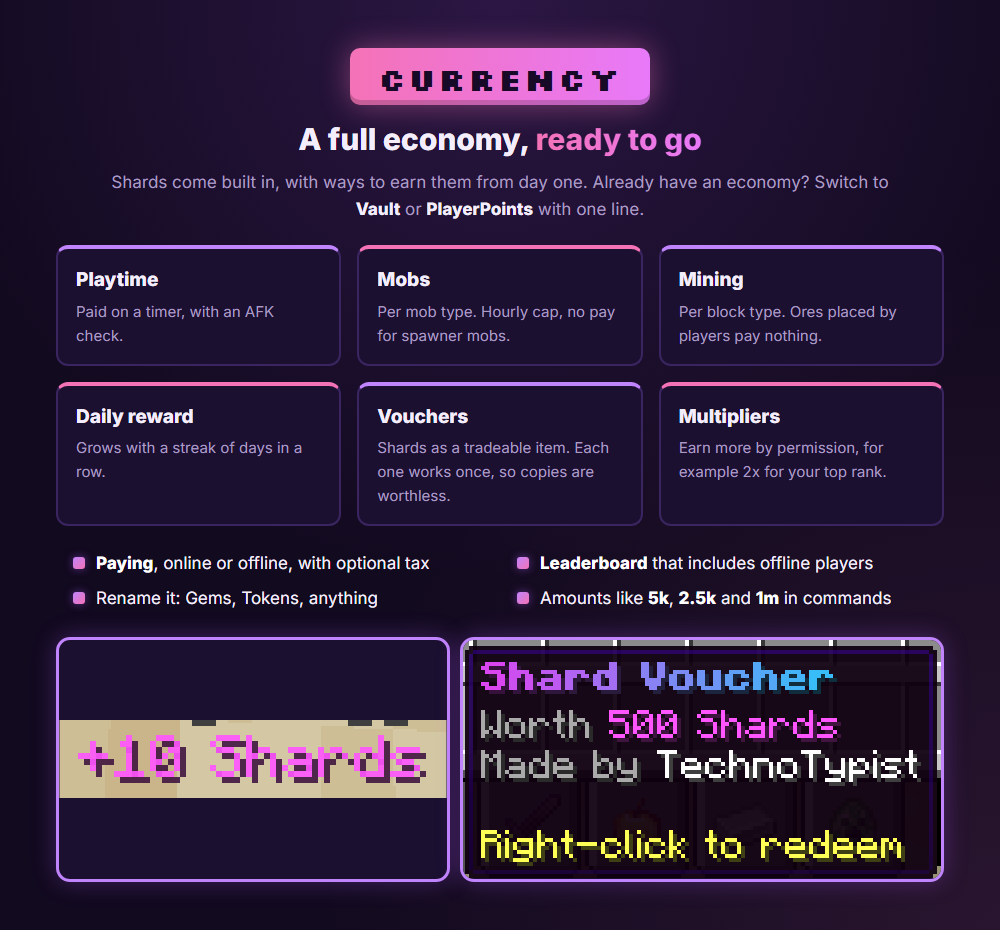
Shards come built in, and players earn them from playtime, mobs, mining and a daily streak. Spawner mobs and placed ores pay nothing, so farms can't print money. Add multipliers by permission, trade shards as one-use vouchers, or rename the currency. Already have an economy? Switch to Vault or PlayerPoints with one line.
Run it all from in game
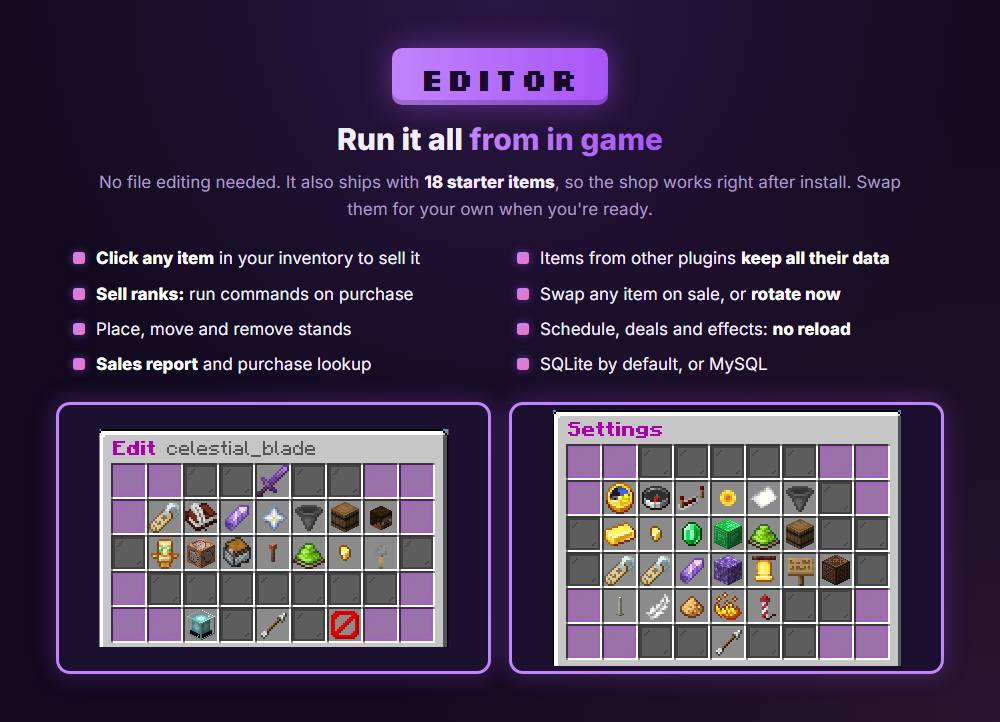
Click any item in your inventory to sell it. Items from other plugins keep all their data. Set the price, rarity, stock, limits and commands in a menu, so you can sell ranks and keys too. Swap items on sale, rotate on the spot, place stands and change settings with no reload.
Rebuilt from the ground up
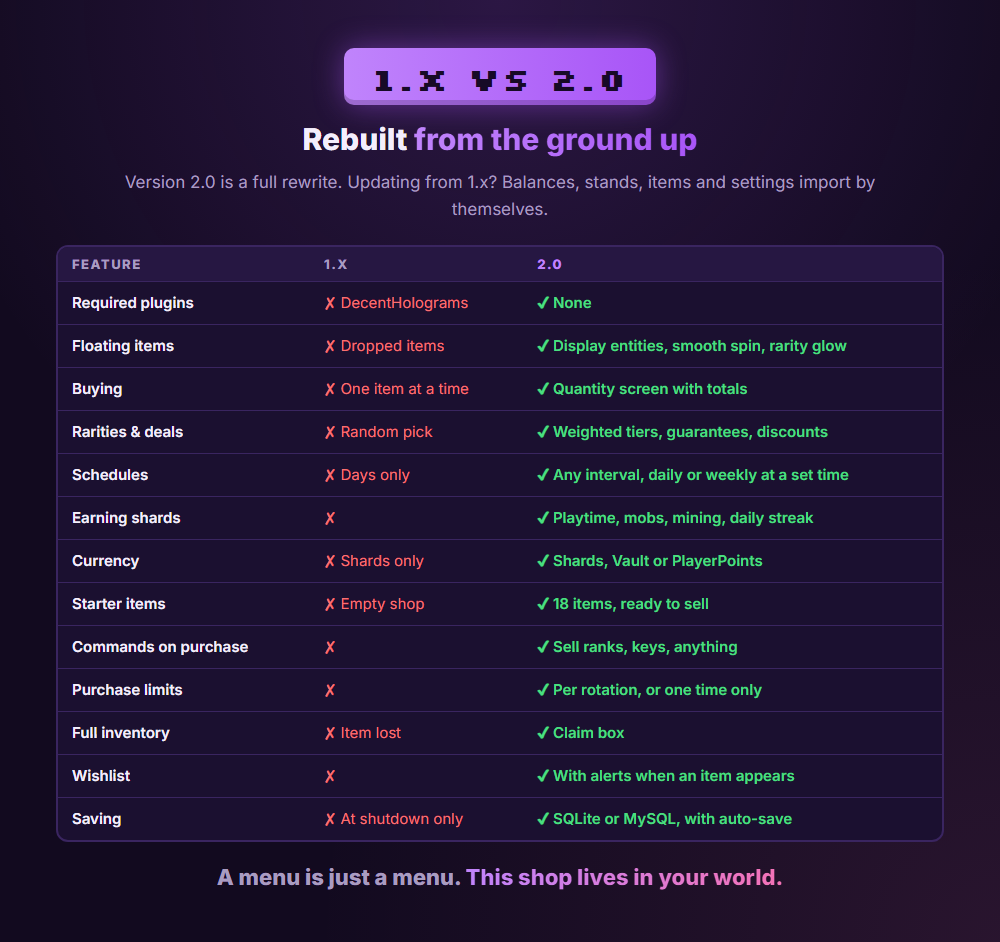
Version 2.0 is a full rewrite. Updating from 1.x? Swap the jar. Balances, stands, items and settings import by themselves, and your old files are kept in a backup folder.